


기술로 배움을 연결합니다
이 공간은 CT의 Edutech Research팀에서 연구하고 있는 주제를 공유하는 장입니다.
내용은 모두에게 공유되어 있으나 내용 중 일부는 저작권의 보호를 받을 수 있으므로, 공유 시 반드시 출처를 밝혀주시기 바랍니다.
Math Word Problem (MWP) solving involves understanding mathematical questions expressed in natural language and deriving the appropriate mathematical equations. Traditional approaches heavily rely on simple lexical pattern matching, limiting their flexibility in diverse real-world scenarios. Our co-authored paper introduces ATHENA (Attention-based THought Expansion Network Architecture), designed to mimic human cognitive processes for more generalized and robust mathematical reasoning.
Let's explore how ATHENA achieves robust performance and why this matters for mathematical reasoning in AI.
Research Background
Math word problem (MWP) solving involves translating complex linguistic descriptions into mathematical expressions. Traditional models tend to memorize lexical patterns rather than understand mathematical principles and procedures, limiting their ability to generalize to unseen or slightly varied problems.
Consider the following cases: calculating the area of a rectangle and determining how many items can be evenly distributed across containers. While both require multiplication, they involve different types of conceptual understanding.
Previous methods have struggled with two key aspects in reaching human-level understanding:
ATHENA: Mathematical Reasoning with Thought Expansion
NLP
Math Word Problem
ML
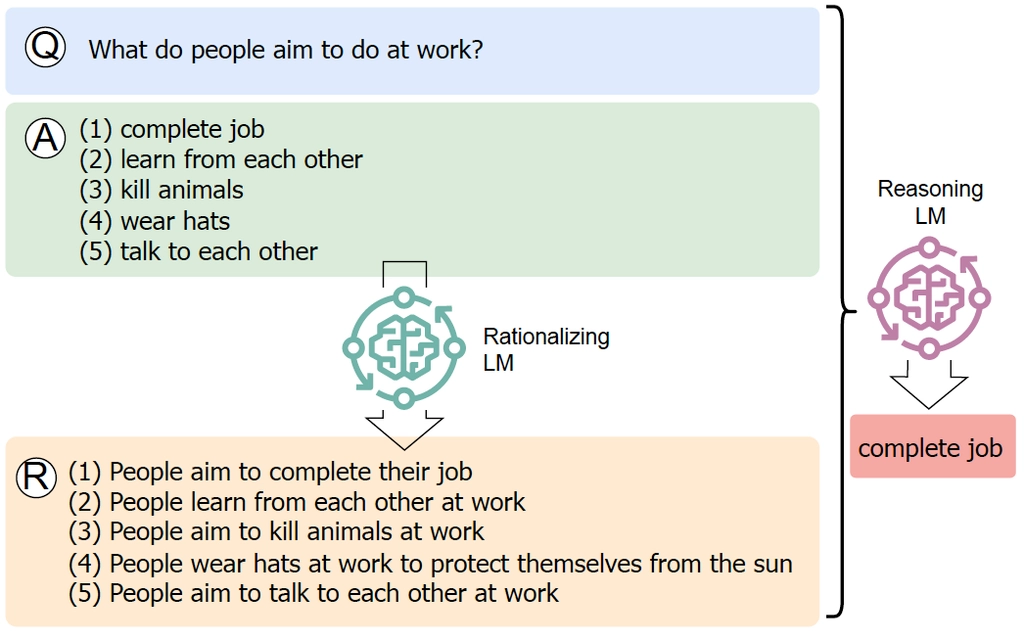
Handling Ambiguous Rationales in Natural Language Reasoning
Natural Language Reasoning
NLP
ML
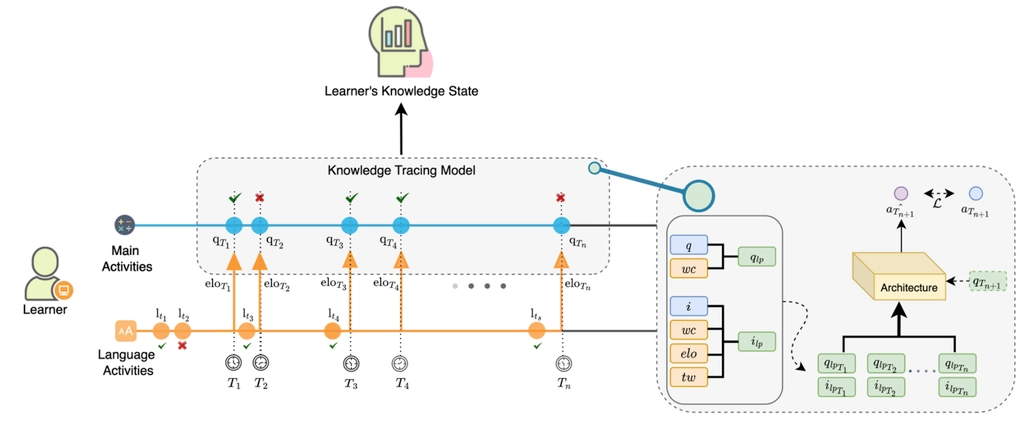
Language Proficiency Enhanced Knowledge Tracing
Knowledge Tracing
Student Modeling
Learning Analytics
Language Proficiency
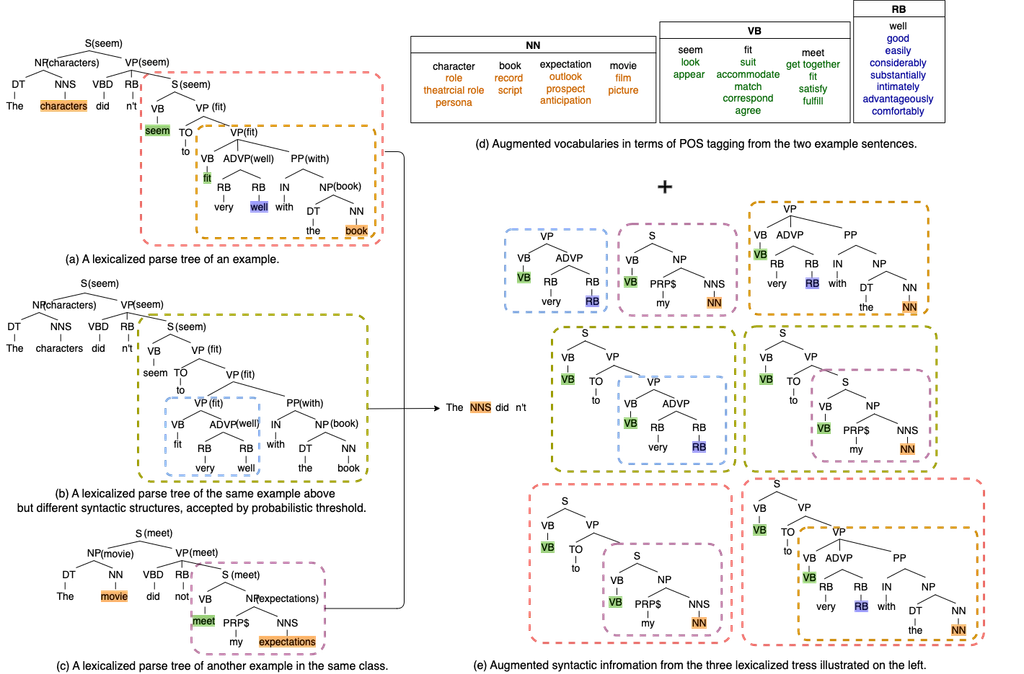

Learning with Limited Data using Compositionality in Language
NLP
ML
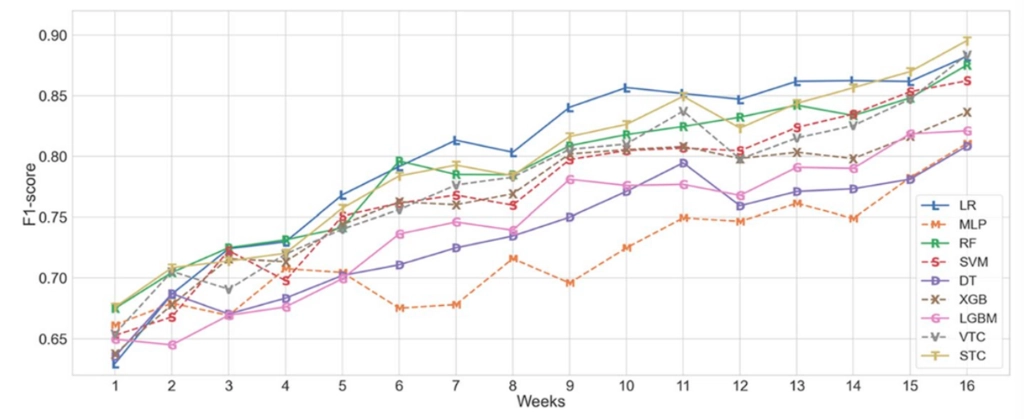

교육 현장의 목소리를 반영한 LMS 데이터 기반의 실용적인 학습 성취 조기 예측 방법 제안
LMS
Education


Emerging Knowledge from Pre-Trained Language Models for Psycholinguistic Analysis
Psycholinguistic Analysis
NLP
ML
ⓒ CT Corp. 2026